

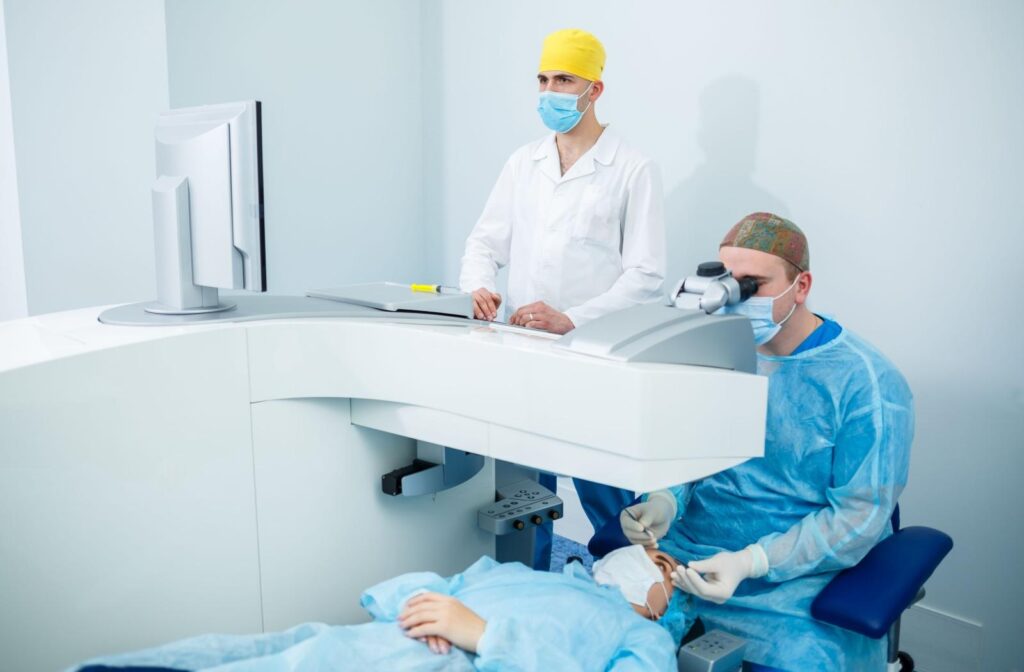
Maybe you find yourself holding a restaurant menu at arm’s length just to read the daily specials, or maybe you’re tired of needing to wear glasses just to read road signs across the street. At Total Vision Carlsbad Plaza, we know that these daily frustrations often make you wonder if laser eye surgery could provide you with a more permanent solution or clear vision. You likely have many questions, but the first one is whether there are any age requirements.
Many older adults may still be candidates for laser vision correction, depending on their eye health and visual goals. Our team can perform a laser eye surgery consultation to help determine whether this is the right treatment for you. In some cases, adults over 50 may benefit more from lens replacement procedures than laser vision correction, depending on their eye health and the presence of cataracts.
Key Takeaways
- Laser vision correction has a minimum age of 18 but no strict upper limit.
- Overall eye health matters more than the year you were born.
- There are options to address blurry close-up vision as you get older.
- Routine laser procedures might require out-of-pocket payment, but you should always check your individual insurance plan and coverage.
Age Limits and Laser Vision Procedures
Minimum Age Rules
Just like most elective surgical procedures, there is a minimum age you must be before getting laser eye surgery. In most cases, eye doctors require individuals to be at least 18 years old for laser vision procedures. This is often because your eyes continue to change shape throughout childhood and adolescence.
Your vision prescription often needs to stay stable for 1 full year before any procedure, which helps the surgery provide lasting results. You wouldn’t want to go through with a surgery only for your prescription to change drastically shortly afterward.
Age Limits for Seniors
Technically, there are no maximum age limits for laser vision correction. As long as you have healthy eyes and are approved by an eye doctor, seniors over 70 can qualify for these procedures.
Healthy corneas (the clear outer layer of your eye) and a stable prescription play a large role in your eligibility. Our eye doctor can evaluate your specific situation to determine your eligibility.
Eye Health Changes After Age 40
Age-Related Farsightedness
Presbyopia is a common age-related vision change that often affects people after they turn 40 years old. This natural change happens because the lens inside your eye loses flexibility, causing close-up vision to become blurry, so you may have to hold a menu or your phone at arm’s length to see properly. Even people who have previously had laser eye surgery may eventually develop presbyopia as part of the natural aging process.
If you’ve noticed that up-close objects are becoming harder to read recently, it might be time to schedule an eye exam.
Cloudy Eye Lenses
Cataracts are a condition that can happen when your eye’s natural lenses become cloudy over time. Protein deposits build up in these lenses, and it can make the whole world look as though you’re viewing it through a foggy or dirty window.
You should schedule an eye exam to talk about cataracts if you notice:
- Cloudy or blurry vision
- Fading or yellowing of colors
- Halos around lights, especially at night
Vision Correction Options for Adults Over 50
Blended Vision Procedures
As you age, you may need a vision solution that allows you to see clearly at multiple distances. Blended vision, sometimes called monovision, is a vision correction strategy that uses 1 eye primarily for distance vision and the other primarily for near vision.
The goal of this procedure is for your brain to naturally adapt to using both eyes together, so that you can switch from driving a car to reading a text message without reaching for your glasses.
Lens Replacement Alternatives
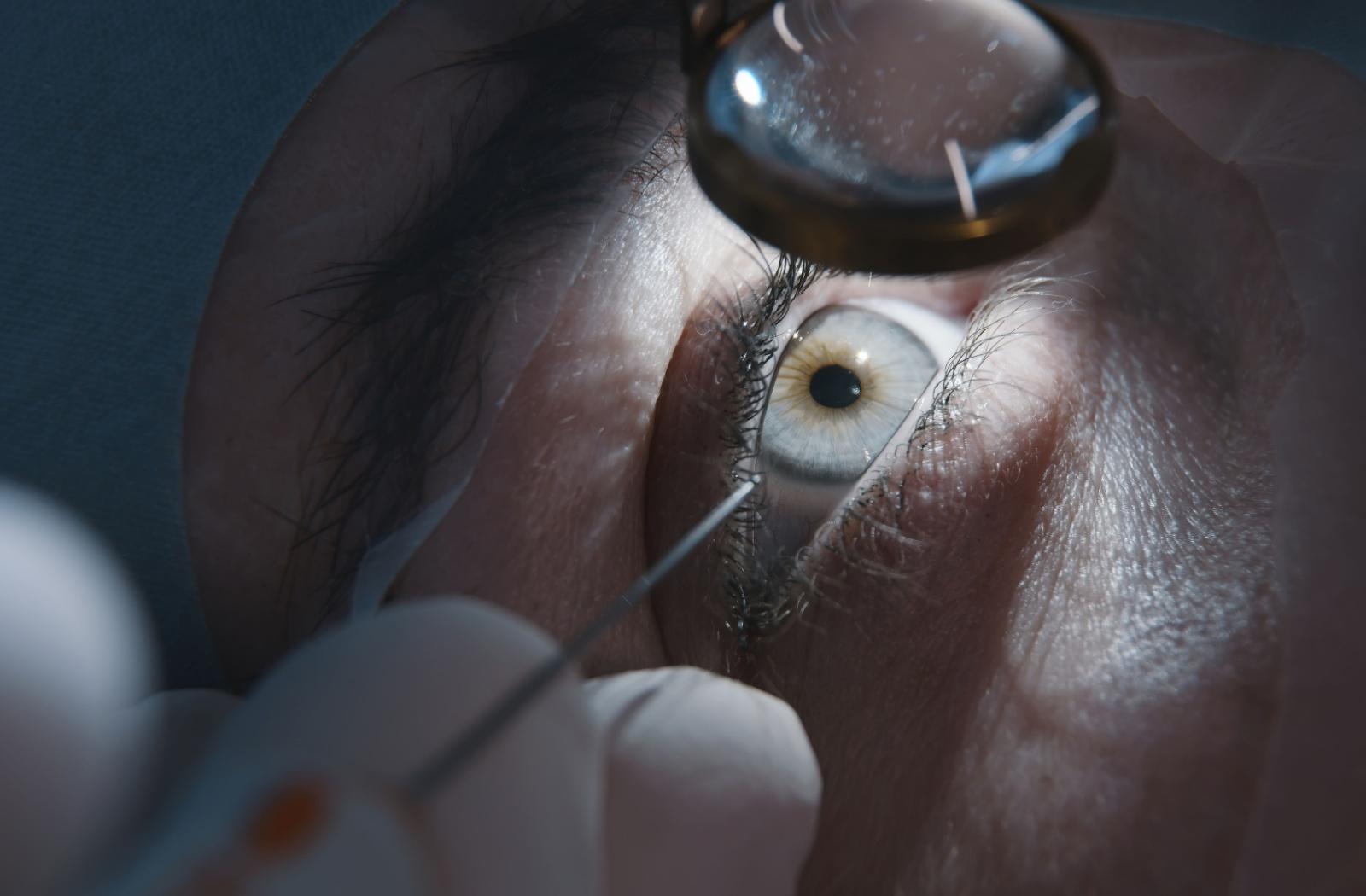
For those with advanced cataracts, your eye doctor or ophthalmologist may recommend surgically replacing the cloudy lens. During this procedure, your eye’s natural lens will be replaced with an artificial lens, addressing the cloudy vision issues and helping you see more clearly.
Medicare Coverage and Vision Procedures for Seniors
Financial planning plays a big role in your vision care decisions. While Medicare may cover medically necessary procedures such as cataract surgery, it does not typically cover elective laser vision correction procedures like LASIK.
An eye doctor in Carlsbad can discuss your insurance and payment options during your visit. Our team can review your insurance plan with you and help you understand any costs before you commit to a treatment plan.
Factors That Make You a Candidate
Signs of Good Eye Health
Before approving you for a vision procedure, your eye doctor can look for certain indicators of eye health. Good candidates for laser eye surgery generally share these characteristics:
- Stable vision prescription for 1 year
- Clear corneas with adequate thickness
- Good overall eye health
- No significant cataracts or eye disease
General Health Considerations
Your body is a connected system. That means that the eye doctor needs a complete health history to evaluate your options and decide whether you’re a good candidate for surgery. This transparency allows our team to recommend the right procedure for your lifestyle.
Book Your Laser Eye Surgery Consultation
You deserve to see the world clearly at every stage of life. If you’re curious about your vision correction options, our team is here to talk you through your options. Schedule an appointment with our practice today to discuss your vision goals and find the right solution.
