

Key Takeaways
- Regular eye exams help you spot vision changes before they affect your child.
- Clear sight supports focus and participation in the classroom.
- An eye doctor in Carlsbad can help you track eye development.
- Physical discomforts like frequent headaches can signal a focus issue.
- Simple habits like outdoor play help manage visual strain.
Vision Problems Can Arise As Children Grow
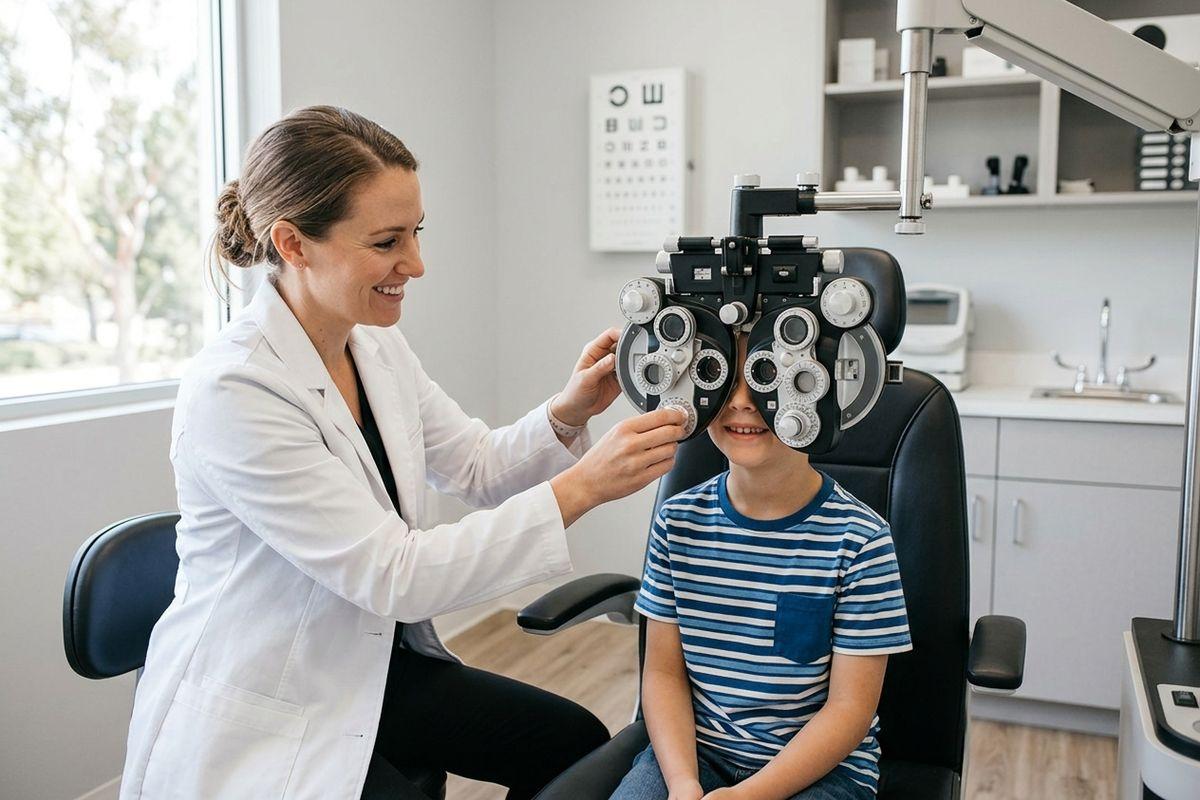
Vision issues often develop as children grow and progress through school. Common vision problems in children include nearsightedness, farsightedness, misaligned eyes, and challenges with focus coordination. An eye exam with your eye care team at Total Vision Carlsbad Plaza can assess your child’s vision and determine the cause of any vision troubles they may be experiencing.
Why Kids Need Routine Eye Exams
Catching Vision Changes Early
Your child’s eyes can change quickly as they grow. For instance, a minor focus issue can turn into a daily struggle within a single school year. Routine checkups allow your eye doctor to track these developments accurately.
Support School Success
Clear sight helps your child join class activities with enthusiasm. A student with clear vision can easily copy notes from the front of the room, participate in group projects, and join in on physical activities at lunch or during recess.
An eye doctor in Carlsbad can help you maintain your child’s visual health throughout the school year.
4 Common Focus Issues in Kids
Nearsightedness and Farsightedness
Some children struggle to see distant objects clearly. This happens when the eye grows too long and causes light to focus in front of the retina, a tissue at the back of the eye that sends signals to the brain. This condition is called nearsightedness (myopia).
Other kids struggle with close vision. This happens when the eye grows too short and causes light to focus behind the retina, and it’s known as farsightedness (hyperopia).
Astigmatism
Astigmatism is when the shape of the cornea is irregular. Astigmatism causes blurry vision at all distances and can make straight lines look wavy or distorted.
Lazy Eye (Amblyopia)
Sometimes your child’s brain relies too much on one eye to process visual details. In these cases, the brain starts to ignore signals from the weaker eye to avoid confusing double images. The weaker eye loses focus over time as it goes unused.
This condition is called amblyopia, though it’s sometimes better known as “lazy eye.” Your child’s eye doctor can suggest treatments and therapies to help strengthen the connection between the brain and the neglected eye.
Crossed Eyes (Strabismus)
Some parents may notice that their child’s eyes look in different directions. One eye might turn inward toward the nose or drift outward toward the ear while the other eye looks straight ahead. This misalignment is known as strabismus. Children with strabismus often struggle to make their eyes work together as a team.
Physical Signs to Watch for at Home
Physical Discomfort
Kids often express vision struggles through physical complaints rather than actually telling you their sight is blurry. Pay attention to how they feel after a long day of reading or screen time. If they show any of the following behaviors, you may want to book them an eye exam:
- Your child complains of frequent headaches behind the eyes.
- You spot eyes that look red or watery after school.
- Your kid squints at bright room lights.
Behavioral Changes
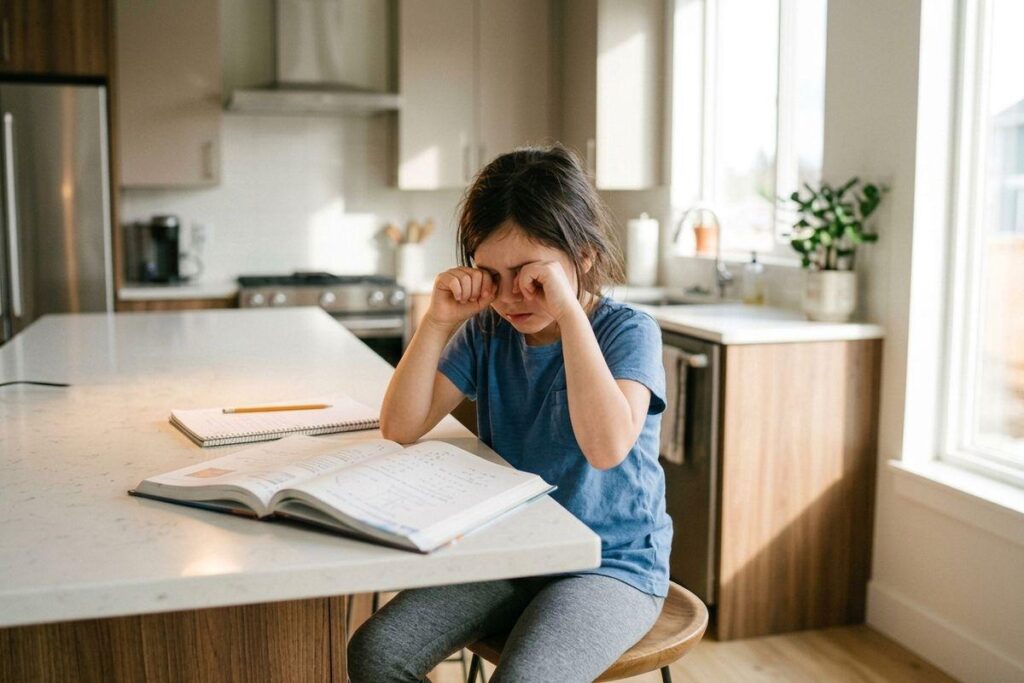
Vision challenges are often misinterpreted as behavior problems or a sudden lack of focus. After all, a kid who struggles to focus visually on a math problem may simply give up on finishing their homework. Potential symptoms of vision issues include:
- A sudden dislike of homework or reading tasks.
- Your kid tilting their head to see the television screen.
- Rubbing their eyes often during a long period of reading or screen time.
Simple Habits to Protect Vision
Daily Screen Time Limits
Digital devices demand intense visual focus. Encouraging frequent breaks from digital devices gives your child’s eye muscles a chance to rest.
Diet and Outdoor Play
Proper nutrition supports overall eye health. Vegetables like carrots and leafy greens provide vitamins that support visual function.
It’s also important to have your child spend time outdoors in natural daylight, as this can reduce their risk of developing myopia.
Treatment Options Available
If your child’s eye exam identifies a vision problem, there are several effective treatment options available depending on their age, diagnosis, and visual needs. These may include:
- Prescription Eyeglasses or Contact Lenses to correct refractive errors such as myopia, hyperopia, and astigmatism.
- Myopia Control Treatments to help slow the progression of nearsightedness, including low-dose atropine eye drops, orthokeratology (overnight corneal reshaping lenses), and peripheral defocus contact lenses.
- Amblyopia (Lazy Eye) Treatment such as patching, atropine therapy, or other vision therapies to strengthen the weaker eye.
- Strabismus (Crossed Eyes) Management with prescription lenses, vision therapy, or referral for surgical treatment when appropriate.
Early diagnosis and treatment can help protect your child’s vision, support healthy visual development, and improve their success at school and during everyday activities.
Protect Your Child’s Vision
Clear vision helps your child explore the world comfortably. Schedule an appointment with our team at Total Vision Carlsbad Plaza to keep your child’s sight on the right track.
