

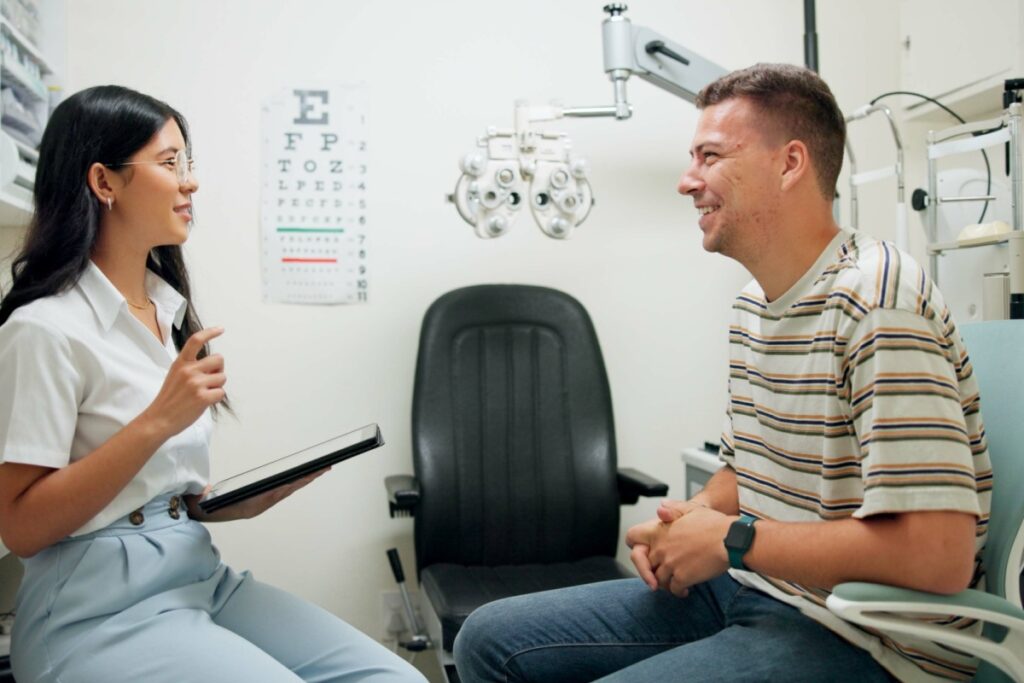
You sit in the exam chair, and your eye doctor starts asking about your parents’ vision problems and your grandmother’s glaucoma. It might seem unrelated to your current eye health, but these questions serve an important purpose in protecting your sight.
Eye doctors ask about family health history because many eye conditions have genetic components that can increase your risk of developing similar problems. Your family’s eye health patterns help Total Vision Carlsbad Plaza create a personalized care plan and catch potential issues before they threaten your vision through comprehensive eye exams.
How Family History Helps Your Eye Doctor in Carlsbad
Your genetic background acts like a roadmap for potential eye health challenges. When you share details about your relatives’ vision problems, you give the doctor valuable clues about conditions that might affect you later.
This information shapes how often you need comprehensive eye exams and what specific tests the doctor should perform. If your father developed glaucoma at 50, the doctor knows to monitor your eye pressure more closely and start screening earlier than usual.
Your family history also influences treatment decisions. Some medications work differently based on genetic factors, and certain conditions respond to specific therapies when caught early through family-guided screening.
What Information Your Doctor Needs
The doctor needs specific details about your immediate family’s eye health. Information about your parents and siblings carries the most weight since you share the closest genetic connections with them.
Details about grandparents, aunts, and uncles also matter, especially for conditions like macular degeneration that can skip generations. The age at which family members developed problems helps predict your timeline for potential issues.
Common Eye Conditions That Run in Families
Glaucoma shows up repeatedly in family trees, often affecting multiple generations. If you have a parent or sibling with glaucoma, your risk increases 4 to 9 times compared to people without a family history.
Macular degeneration exhibits strong genetic links, particularly the dry form, which develops slowly over time. Having relatives with this condition means you need earlier and more frequent retina examinations.
Diabetic eye disease connects directly to family patterns of diabetes. Even if you don’t currently have diabetes, a family history means closer monitoring of both your blood sugar and retinal health through specialized diabetic eye exams.
Vision Problems You Inherit
Refractive errors, such as nearsightedness, follow clear family patterns. Children with 2 nearsighted parents have a much higher chance of developing myopia than those with parents who have normal vision.
Astigmatism frequently runs in families, creating predictable patterns that help doctors anticipate when children might need vision correction. Color blindness passes through specific genetic pathways, affecting mostly males when inherited from their mothers.

Early Detection Through Family History
Your family background helps catch eye problems before you notice any symptoms. Many serious conditions like glaucoma show no pain or obvious vision changes in early stages, making family history one of the most reliable early warning systems.
This proactive approach enables personalized screening schedules that align with your specific risk profile. Instead of waiting for standard screening ages, you might start comprehensive testing years earlier based on your family’s patterns.
Early detection often means the difference between preserving your vision and experiencing damage that can’t be undone. Treatment options through professional eye disease management work much more effectively when conditions are caught in their beginning stages.
Special Tests Your Doctor May Recommend
Eye pressure measurements become routine parts of your exam when glaucoma runs in your family. These tests can detect dangerous increases in pressure before they damage your optic nerve.
Detailed retina photography and specialized scans help monitor for inherited diseases that affect the back of your eye. More frequent comprehensive exams help spot changes quickly so they can be addressed promptly.
What Happens During Your Eye History Review
The doctor asks specific questions about each family member’s eye health and documents any conditions, treatments, or vision loss. This creates a comprehensive genetic risk profile that guides your ongoing care.
All this information gets recorded in your medical chart, so future appointments can build on previous discussions. The doctor uses these details to create a monitoring plan tailored to your unique family background.
Questions Your Doctor May Ask
You’ll discuss which relatives wear glasses or contact lenses and at what age they first needed vision correction. The doctor wants to know about any family members who experienced blindness or severe vision loss.
Questions about diabetes, high blood pressure, and other health conditions help identify indirect threats to your eye health. These conditions often affect vision and can run in families alongside direct eye problems.
How Family History Shapes Your Care Plan
Your genetic risk factors determine how often you need comprehensive eye exams. Higher-risk patients might need annual checkups instead of the standard every-two-years schedule for healthy adults.
The doctor can recommend specific preventive measures based on your family patterns. This might include lifestyle changes, recommendations for protective eyewear, or nutritional supplements that help prevent inherited conditions.
You’ll receive education about warning signs specific to conditions that run in your family. Knowing what symptoms to watch for helps you seek prompt treatment through emergency eye care if problems develop.
Benefits for Your Whole Family
The information you provide helps your relatives understand their eye health risks. When family members learn about shared genetic factors, they often schedule their own comprehensive exams.
Comprehensive exams create a positive cycle of preventive care that protects everyone’s vision. Your proactive approach to eye health can inspire parents, siblings, and children to take their own vision seriously through proper pediatric eye care.
Take Care of Your Family’s Vision
Total Vision Carlsbad Plaza has served the Carlsbad community for over 30 years, helping families understand and manage their inherited eye health risks. Contact the experienced team today to discuss your family history and create a personalized plan for protecting your vision.